
Dead Squirrel Removal in Oregon
Private-property removal · Phone quote before any visit · Independent operators where one covers your address.
Dead squirrel removal in Oregon from an attic, soffit, chimney or crawl space, once the scratching has stopped and a smell has started. ODFW's operator manual lists attics among the dens of the native western gray and of both introduced eastern squirrels.
Who handles dead squirrel removal in Oregon?
Where the animal is lying answers this until the pavement ends. On an Interstate, US route or Oregon state highway it is ODOT's Carcass Collection Program, reached through Ask ODOT on 1-888-275-6368; an animal that cannot be moved off the road safely is a 911 call. On a county-maintained road, the county, and Jackson County names skunks, raccoons and birds among the wildlife it handles case by case. A city street belongs to the city, on whatever it publishes. Private ground belongs to the owner, and Multnomah County states plainly that it "is unable to pick up small wildlife". Past that property line no Oregon agency we found has a role, so Oregon Dead Animal Removal routes the call by ZIP to an independent operator where one covers the address, and whether this situation can be taken on, and the price, are settled on the call. Call (503) 213-6864.
What dead squirrel removal covers, and what it does not
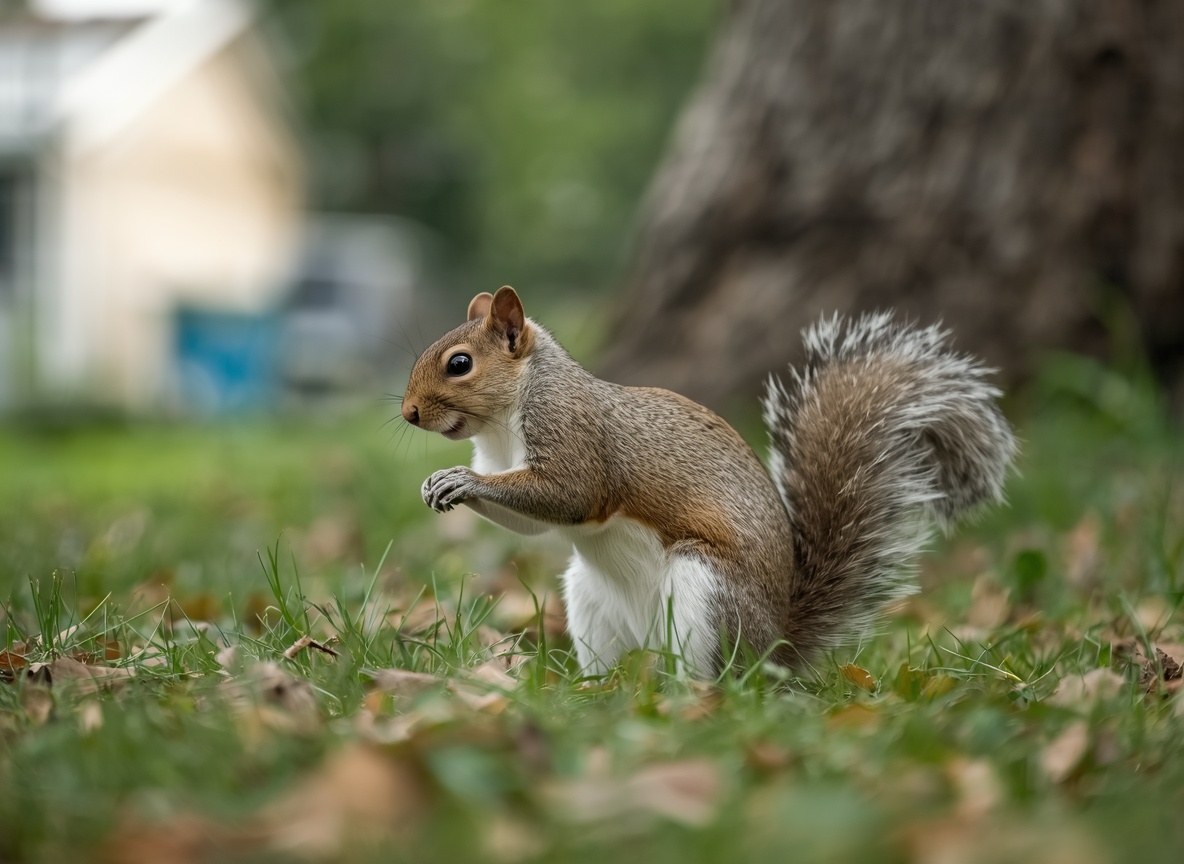
ODFW's Wildlife Control Operator manual gives three tree squirrels an entry each and has all three denning in attics or crawl spaces. The eastern gray and eastern fox squirrel were introduced; the western gray is native and the largest tree squirrel in Oregon. Multnomah County names squirrels among the small wildlife it does not collect, so one that dies above a bedroom ceiling is the householder's to deal with.
The field work belongs to independent operators. Each holds their own permits and insurance and answers for the disposal route. Oregon's regime for that work is ODFW's Wildlife Control Operator permit, which sits with the operator and never with this site. What any individual operator is willing to take on surfaces in the conversation, not on this page.
Whose job is a dead squirrel in Oregon?
Where it is lying decides it, and Jackson County Roads writes the boundary down in one sentence: the roads it manages "differ from city streets, state highways, and private roads or private property." The state system runs as a maintenance program rather than a statutory duty, and no Oregon statute we located pushes any of this onto a homeowner's yard.
- Interstates, US routes and Oregon state highways: ODOT, through a Carcass Collection Program that picks up roadkill on major state roadways and records carcass data to find collision hot spots. The published way in is Ask ODOT on 1-888-275-6368; there is no carcass-specific hotline. Move the animal off the road only if it is safe, and call 911 if it cannot be moved safely.
- County-maintained roads: the county road department. Jackson County handles "wildlife such as deer, elk, skunks, raccoons, and birds … on a case-by-case basis" on its own roads; Washington County routes deer, elk or livestock in a public road right-of-way to its Land Use & Transportation operations division.
- City streets, the curb strip, parks and bike paths: the city, under whatever it publishes. Eugene defines its right-of-way for residents and collects there on 541-682-4800. Each city page quotes its own wording.
- Your own ground, from the side lot to the crawl space: yours to arrange. Eugene states that "the property owner is responsible for disposal"; Multnomah County requires an animal in a private area to be "moved to the public right of way for pickup" and says it "is unable to pick up small wildlife" at all. ORS 601.140's 15-hour rule reaches a domestic animal a keeper owned or had in charge, not wildlife you found. That last case, the one with no agency behind it, is the reason this site exists.
The agency-by-agency breakdown, with the quotes, is in the guide to who removes dead animals in Oregon.
A dead squirrel removal call, start to finish
- Describe the smell and where it sits: under the roof, along the eaves, at the fireplace or below the floor. Scratching you heard in daylight before the smell began is a good clue, since all three tree squirrels in ODFW's operator manual are active by day.
- Where an operator can take the job, the search starts from the attic hatch or the crawl space access.
- The body is bagged and taken out with the nest material and fouled insulation lying within arm's reach.
- One that slid into a wall bay is lifted from the top plate when a hand or tool can reach it. No finished wall or ceiling is cut.
- You are shown where it got in, and who closes that hole is your call.
Who sets the price for a dead squirrel removal
The figure is assembled during the call by whoever would attend, once the animal, its position, the access and the disposal are all known. It is not an hourly rate. No figure appears on this page either. It belongs to the operator who takes the job, and a number typed in to fill the space would bind a person who never agreed to it.
The figure is agreed on the call. The invoice is raised by whoever carries out the work, and never by this site.
What waiting costs you
Sooner is cheaper. Whatever the animal is resting on takes up the fluids, and crawl space soil, insulation and framing all hold them, so each additional day generally means more material has to be bagged or treated alongside the carcass. One question comes ahead of this one: where somebody in the house or a pet has been in contact with a raccoon or a skunk, that belongs to a vet or a local health department first.
What callers ask about dead squirrel removal
Which squirrel is likely to be in my attic?
Does the species change what happens?
Will the county collect a dead squirrel?
Is a dead squirrel a disease risk?
The smell seems to come from inside a wall. What then?
Could the squirrel be in the chimney?
Is someone available to come to my address?
Statewide questions on law, safety and process are on the Oregon FAQ.
Dead Squirrel Removal in Oregon: the rest happens on the phone
One description is enough. Availability for the address and the figure are both settled while you are on the line.